
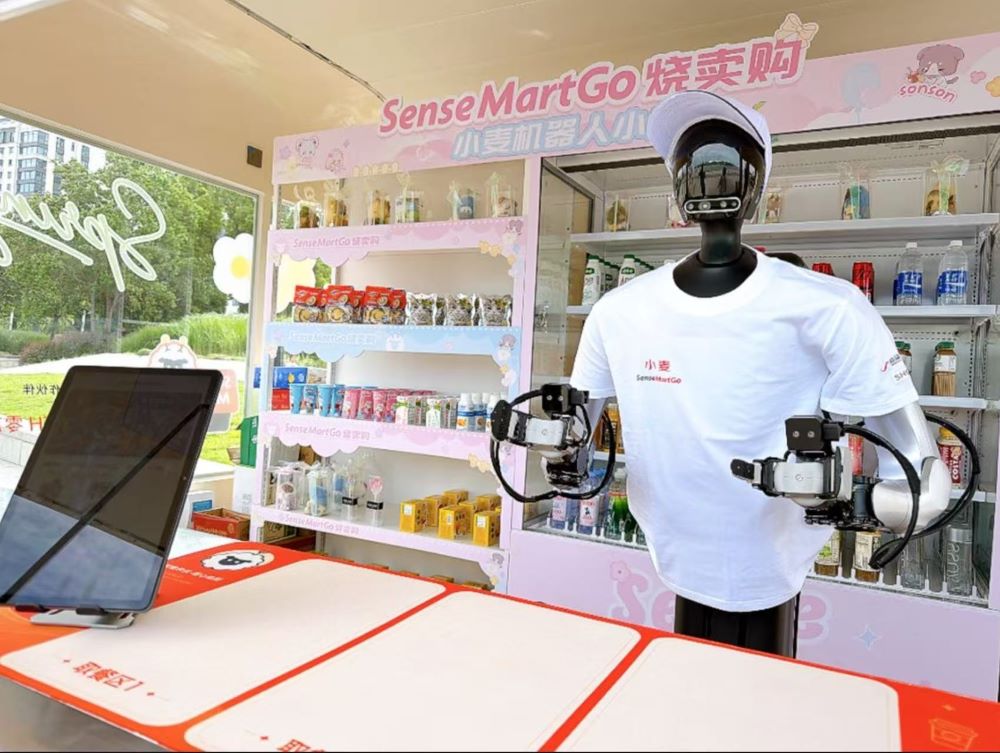
- The SenseMartGo chain says robots can cut store labor to a fraction of traditional convenience stores
- But maintenance, customer retention and the economics of new locations could determine whether the model works beyond pilot stores
A robot-run convenience store in Shanghai is putting a simple question to the test: can a business that works with one store also work with hundreds?
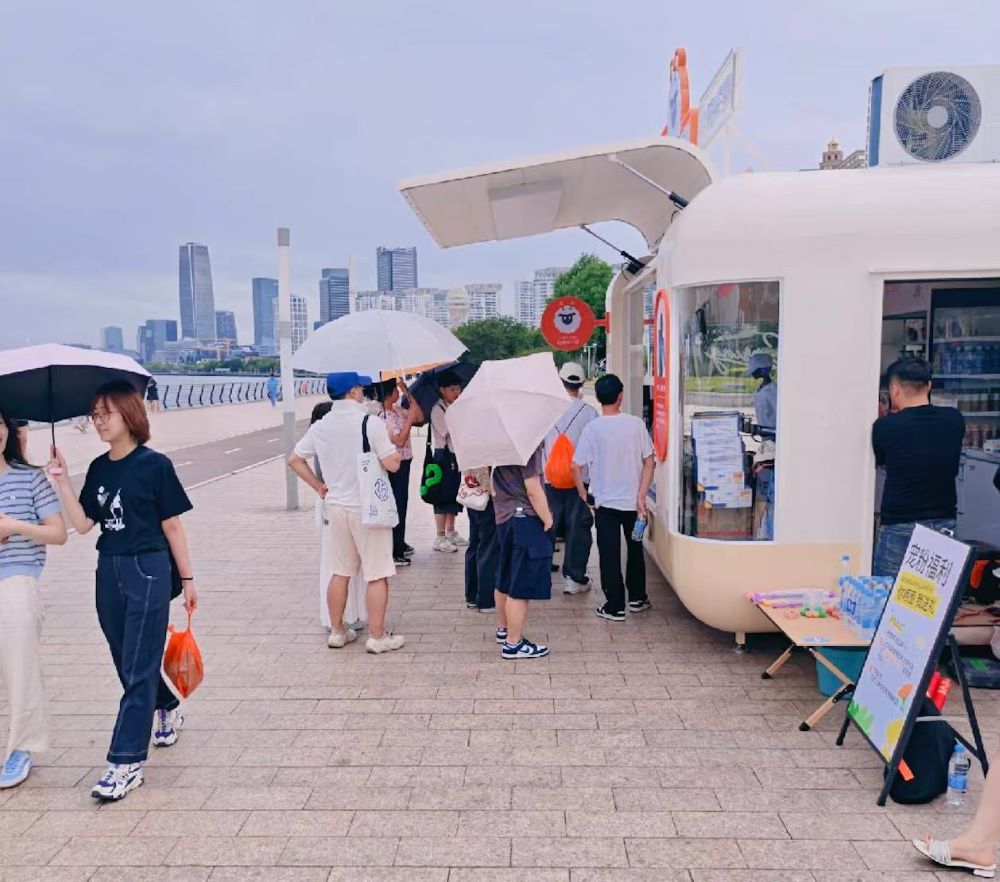
During China’s National Day holiday, customers at SenseMartGo (烧卖购), a robot convenience-store chain operated by AI heavyweight SenseTime’s retail arm SenseMart (商汤善惠), could scan a QR code, place an order and collect coffee or snacks from a robot in as little as 15 seconds.
Average delivery time was 29 seconds, according to the company.
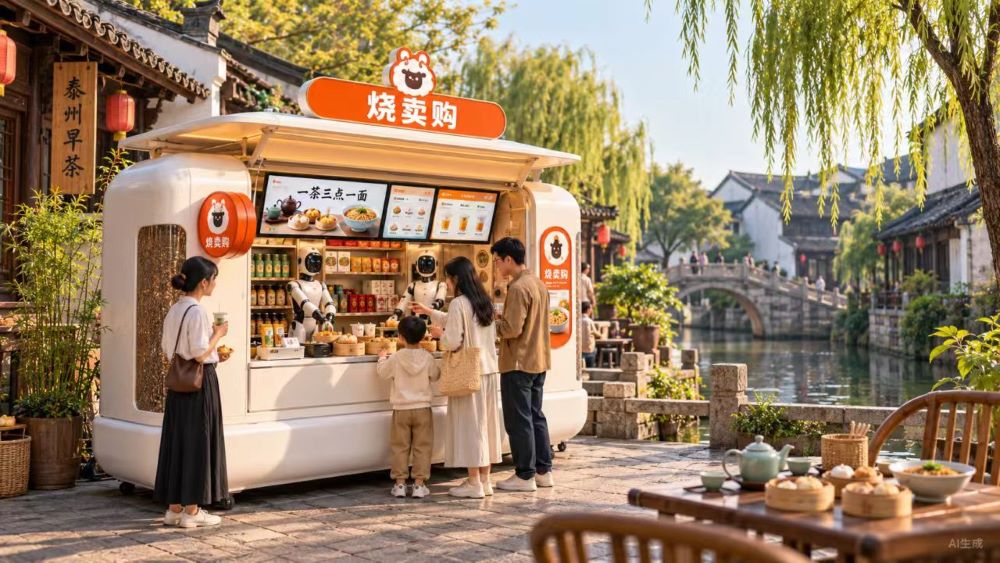
SenseMart ultimately wants to take the model much further, with an ambition to reach “thousand cities, tens of thousands of stores.”
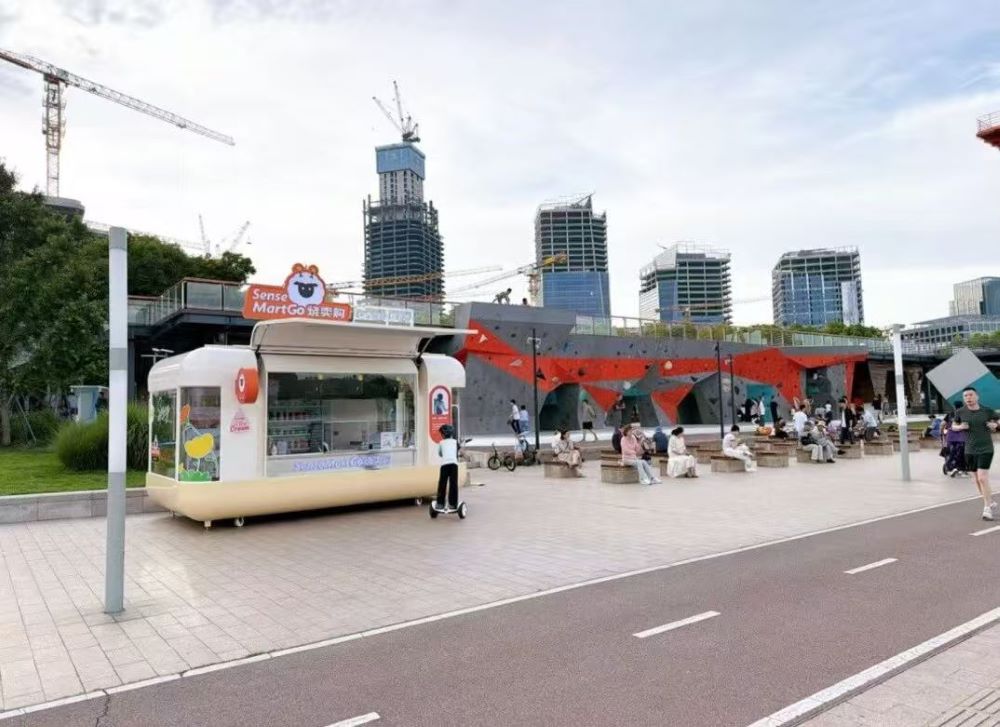
SenseMartGo now has more than 20 stores in Shanghai, Hefei, Shenzhen, Qingdao and Yancheng, spanning campuses, malls, industrial parks and tourist attractions.
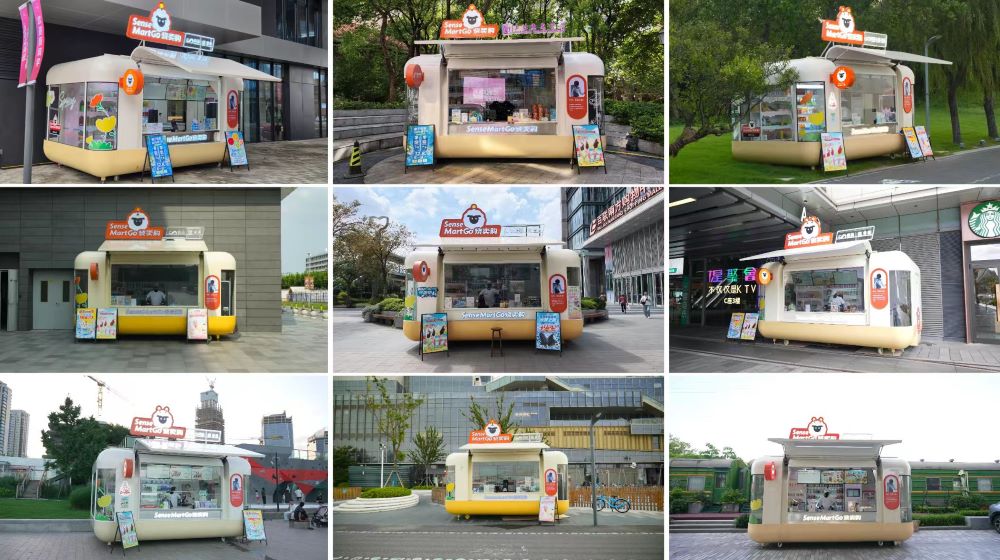
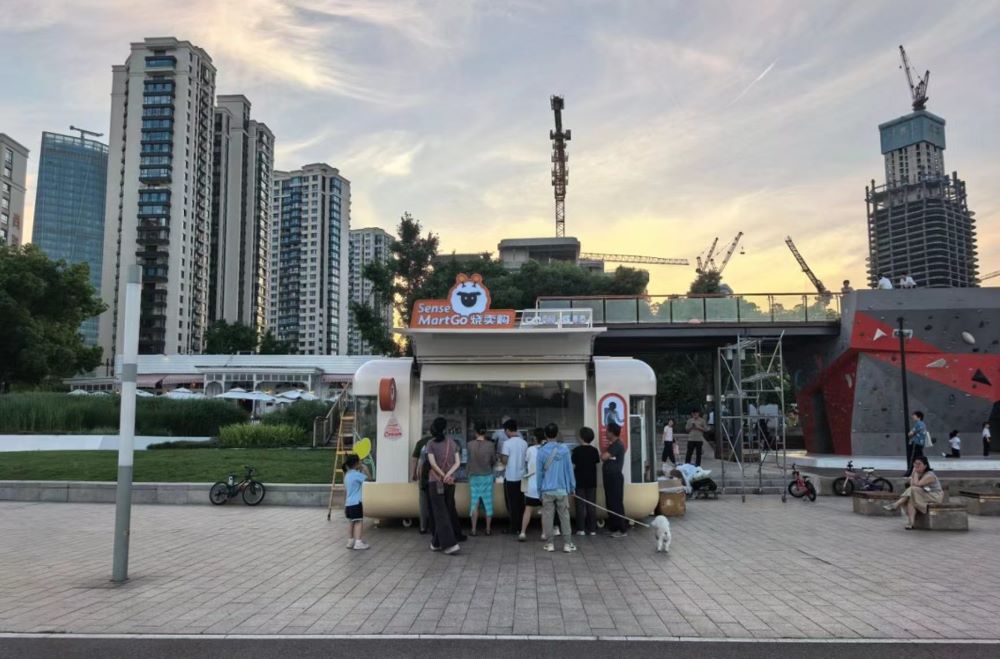
The test has produced an encouraging early signal. Two SenseMartGo stores on Shanghai’s Xuhui waterfront are only 30 to 50 meters apart, yet opening the second did not reduce sales at the first.
Combined sales roughly doubled, SenseMart co-founder Yi Shuai (伊帅) said, suggesting that demand in some locations may still exceed available service capacity.
The economics of a robot store
SenseMart says each store requires the equivalent of only 0.2 to 0.3 employees on average, with one person able to support three to five stores. A conventional convenience store typically needs about two employees working shifts.
SenseMart estimates a payback period of about six months to a year for prime locations in Shanghai and about a year for average locations.
But Yi cautioned that robots do not create demand by themselves. Their value comes from improving the economics of a location that already has sufficient foot traffic.
That distinction matters. A profitable robot store does not automatically translate into a profitable robot-store network.
Selling the operating system
SenseMart is betting that the scalable part of the business is not the store or even the robot, but the software connecting them.
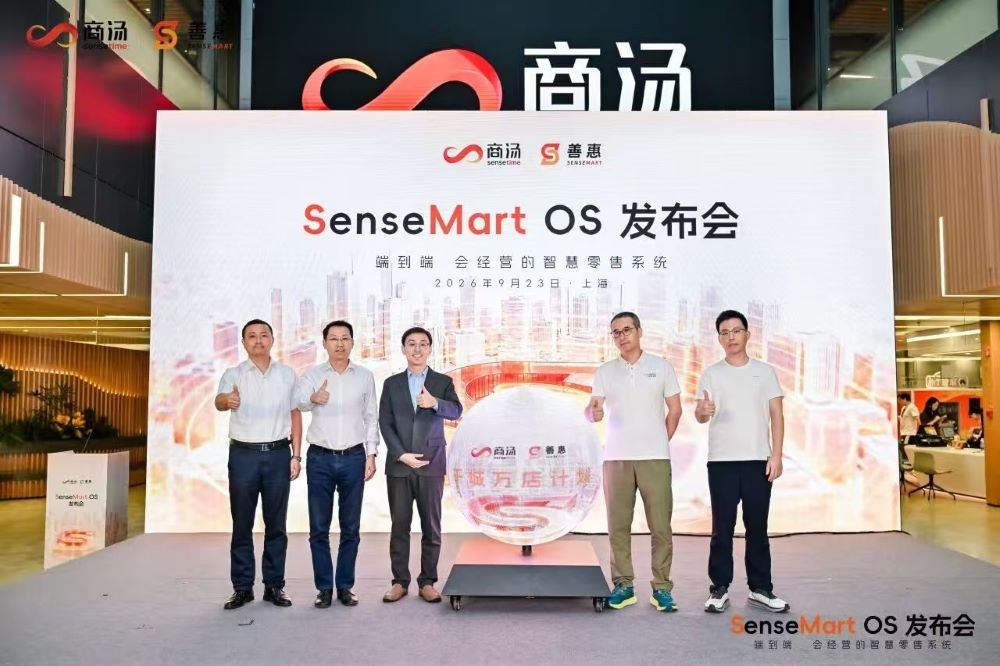
The company launched SenseMart OS on September 23 as what it calls a physical operating system for retail. The platform is designed to connect different robot makers with retailers and franchise operators rather than lock stores into a single type of machine.
Its system combines a retail “brain” for perception, interaction, decision-making and execution with a hardware layer that can connect robotic arms, dexterous hands and humanoid robots. A data platform then feeds information from stores back into model development.
That approach could address one of the biggest problems in physical AI: robots can perform individual tasks, but running a business requires them to coordinate inventory, payments, products, customer interactions and exceptions.
Maintenance is the real test
SenseMart acknowledges that its model still has a major weakness: robot maintenance.
“We still don’t have an after-sales service system that can provide rapid on-site repairs like those for air conditioners or televisions,” Yi said.
That could become a serious bottleneck if the company expands from dozens of stores to thousands.
More locations would mean more hardware failures, spare parts, logistics and technicians — all of which could materially change the economics of the model.
Customer behavior presents another uncertainty. Robot stores can attract people because they are novel, particularly in tourist areas and on campuses. But long-term profitability depends on whether customers keep returning after the novelty fades.
Yi said several stores had operated for months without a significant decline in sales, with revenue remaining stable. The company has not provided longer-term data to establish whether that trend holds across its network.
Beyond the robot
The more important lesson from SenseMartGo may therefore have little to do with whether a robot can “run” a store.
SenseMart is trying to build the layer between robot hardware and commercial operations. Robot makers can provide machines that grasp, move and deliver products.
But someone still needs to make those machines understand inventory, process orders, handle exceptions and operate within a retail workflow.
SenseMart has an advantage here because it has spent five years in retail, accumulating visual data on about 300,000 product types, 1.5 million daily transaction orders and 8,000 hours of environmental data, according to the company.
That gives it a potential edge over robotics companies starting from the hardware side. But the real test of its “thousand cities, tens of thousands of stores” ambition will not come from another robot demonstration.
It will come from whether each new store can recover its investment, whether a broken robot can be repaired quickly and whether customers continue to buy from it after the novelty wears off.
Header image credit: Shanghai Xuhui official WeChat

