- The annual 10 million yuan fund will back developers building AI agents for everyday needs outside traditional working hours
- Winning applications could eventually reach Alipay’s AI assistant and its more than 1 billion users
Alipay is putting 10 million yuan ($1.49 million) a year behind a new prize aimed at encouraging developers to build AI agents for the hours when traditional services are least available.
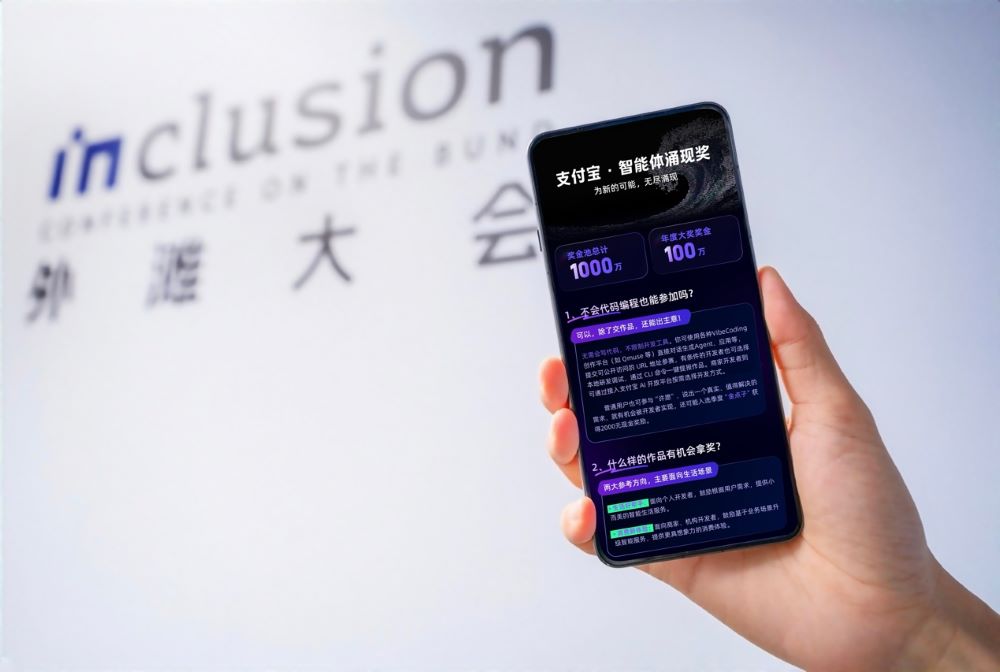
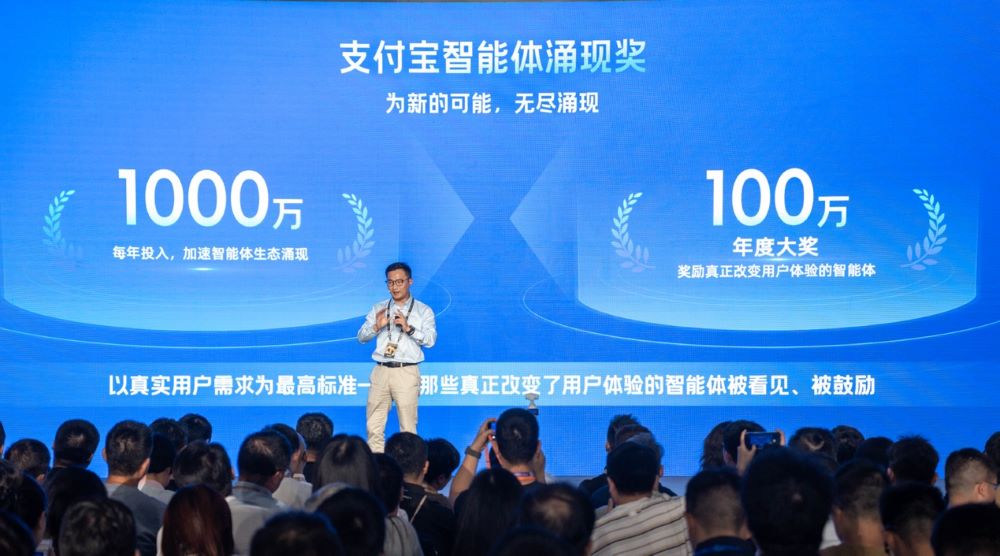
The Chinese payments giant announced the “Agent Emergence Prize” (“智能体涌现奖”) on September 10 at the 2026 Inclusion Conference on the Bund in Shanghai.
The program will award 1 million yuan for its top annual prize, with the first winners expected to be announced in the fourth quarter of 2027.
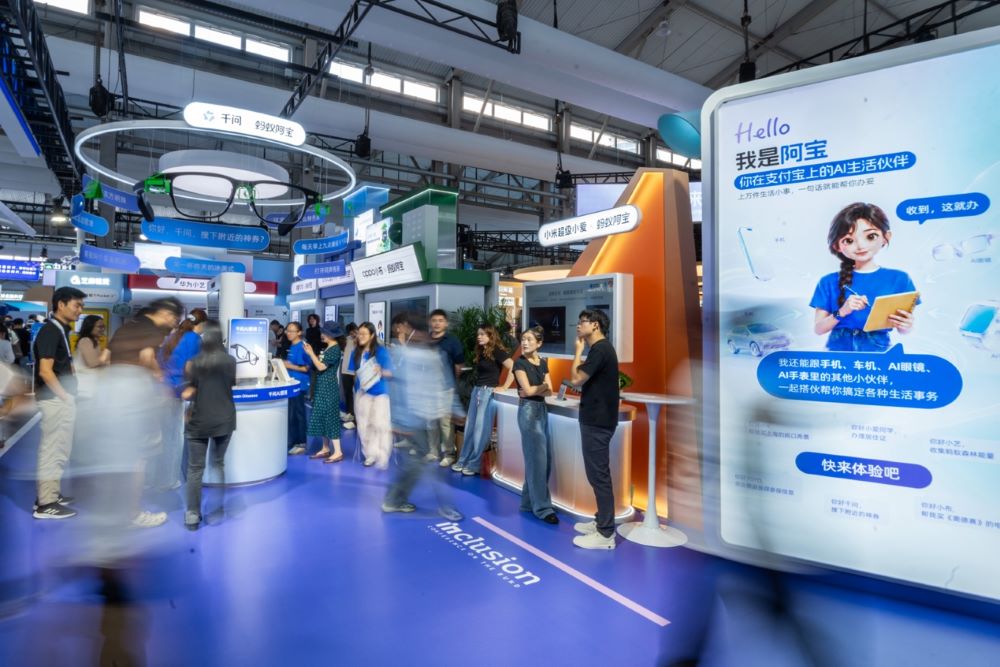
The competition will run through quarterly selections and an annual contest. Developers can receive an initial reward worth 5,000 yuan for shortlisted projects, while mature applications that win or make the shortlist could have a chance to be integrated into Alipay’s AI assistant, Abao, and made available to its user base.
Betting on after-hours AI
Developers do not need to write code. Instead, they can use natural-language instructions to build agents designed to handle specific, often fragmented needs in everyday life.
The focus reflects a broader view from Han Xinyi (韩歆毅), CEO of Ant Group, Alipay’s parent company, who said at the summit that an explosion of AI agents beyond the traditional eight-hour workday is inevitable.
By “eight hours beyond work,” Han means the hours after work, weekends and late at night — periods when many conventional services are less accessible or too costly to provide on demand.
Between midnight and 6 a.m.
He cited Ant’s health AI service Afu as an example. About 55% of its users come from third-tier cities and smaller markets, nearly 30% are older people, and about one-sixth of consultations take place between midnight and 6 a.m.
Those users and time periods represent areas where traditional service systems often have weaker coverage.
AI agents could make services that once relied on scarce experts or were too costly to deliver at scale available to a much wider population.
Li Jun (李俊), president of Alipay’s business group, said AI agents will inevitably expand into broader consumer and lifestyle scenarios, where a large pool of unmet demand is waiting to be activated.
Beyond efficiency
The initiative also reflects a broader debate inside Ant about how AI can create economic growth.
Han argued that the AI economy cannot rely indefinitely on capital spending, while AI applications cannot remain focused solely on improving efficiency within existing businesses.
If AI mainly replaces existing labor or makes existing processes more efficient without generating new demand, he warned, it could create new imbalances between supply and demand and weaken the returns on AI investment.
From chat to action
The agent prize is therefore more than a developer competition. It is an attempt by Alipay to use financial and platform incentives to encourage a new layer of AI-powered services — ones that create new supply while unlocking demand that conventional services have struggled to serve.
If agents can move from simply answering questions to actually getting things done, Alipay is betting that the next phase of China’s AI economy will emerge not just in the workplace, but in the hours around it.
Header image credit: Alipay