Zhejiang targets $45 billion marine clean-energy industry by 2030 2026-09-29 This policy push comes as the coastal province seeks to shift from a major power consumer to a growing source of clean electricity.
China’s ‘SpaceX for AI’ project launches space-computing initiative 2026-09-24 The move marks a shift from developing the Xingshu Project itself toward building a broader industrial ecosystem around space-based computing.
Hangzhou offers startup hubs AI tokens to cut costs for young founders 2026-09-21 Instead of only subsidizing rent or providing cash, cities could increasingly help startups by covering part of their AI usage costs.
Shanghai builds a full-cycle capital ecosystem to back biotech companies 2026-09-18 The initiative reflects an effort to move from investing in individual biotech projects to building an ecosystem around them.
World AI open-source competition brings 70 finalists to Hangzhou 2026-09-15 The decision to hold the finals in Hangzhou comes as the global AI open-source ecosystem becomes increasingly fragmented.
Pudong builds silicon-photonics chain as monetization gains traction 2026-09-15 The push comes as the global silicon-photonics industry shifts from technology validation to manufacturing, testing, deployment and scaling.
Zhejiang expands innovation vouchers to bridge lab-to-market gap 2026-09-14 The concept originated in Europe, where countries including the Netherlands and Belgium introduced similar schemes in the 2000s.
Academic fraud buster sets up shop in Hangzhou despite controversy 2026-09-10 The development has drawn attention partly because Geng does not fit the conventional profile of an academic or science communicator.
Zhejiang leads China’s 2026 private-sector innovation rankings 2026-09-09 The trend reflects a broader shift in Zhejiang from “follower” innovation toward technology-led competition.
Hangzhou gives young entrepreneurs a break on their AI bills 2026-09-04 The initiative is the latest in Hangzhou’s effort to lower the cost of starting and running small technology businesses.
Shanghai summit to put AI to work as robots move from demos to real jobs 2026-09-04 The shift reflects a broader change in China’s robotics industry: humanoids are moving from perform for audiences to doing real work.
Pudong wins national pilot to tackle embodied AI’s data shortage 2026-09-04 The designation puts Pudong in charge of exploring standards and practices that could eventually be adopted across the country.
Shanghai’s chip industry doubles to $86 billion in five years, forum told 2026-09-01 The city has built an “one core, two wings” industrial layout centered on Pudong, with Lingang and Jiading as the two supporting hubs.
Hangzhou builds digital bridge as Africa rises on China’s tech agenda 2026-08-29 It will serve as a public-service platform and cooperation gateway for Zhejiang companies seeking to enter African markets.
Hangzhou forms quality standards alliance for embodied robots 2026-08-29 The city is now among the country’s first to combine dedicated legislation with an accompanying industry action plan.
Shanghai launches ‘Solar Valley’ to build fusion energy industry hub 2026-08-28 The “Solar Valley” will comprise three zones covering scientific research, industrial support and startup incubation.
Shanghai targets $312 billion in strategic emerging sectors by 2030 2026-08-27 For international investors, the plan offers a relatively clear picture of where Shanghai expects its next wave of industrial growth to come from.
China unveils next-gen fusion reactor at Shanghai conference 2026-08-27 Once completed, China Fusion Engineering Test Reactor IV is expected to compete with projects such as the US-based SPARC and the UK’s STEP.
Hangzhou fair to put Token economy at heart of global AI trade 2026-08-25 The event will also bring together Hangzhou’s “Six Little Dragons” and the “New Eight Stallions” for the first time.
Hangzhou opens China’s first training center for embodied robot operators 2026-08-17 The move addresses a new question for embodied AI: who will train, operate and manage robots once they enter the workplace.
Shanghai unveils 20 measures to boost private investment in deep-tech 2026-08-14 The plan focuses on expanding investment opportunities, strengthening financial support and improving the policy environment.
Jiangsu targets $9 billion commercial space output by 2028 2026-08-14 Jiangsu is positioning its manufacturing base to become a key part of China’s commercial space supply chain.
Zhejiang unveils 18 measures to boost brain-computer interface sector 2026-08-13 By 2030, Zhejiang aims to establish a BCI technology and industrial innovation hub with strong international competitiveness.
Shanghai lands first reusable rocket factory in Lingang area 2026-08-12 The facility is the first reusable launch vehicle assembly base and research center established by a commercial rocket company in Lingang.
Suzhou park’s trade surges past $151B, fueled by AI hardware boom 2026-08-10 Suzhou Industrial Park’s milestone offers a glimpse into how AI is changing the geography of global manufacturing.
Zhejiang sets 20,000-unit humanoid robot production goal by 2027 2026-08-07 The province will build a core industry worth 20 billion yuan ($3 billion), with related industries exceeding 50 billion yuan.
Hangzhou opens first cross-river drone delivery route 2026-08-05 The city has built 14 public drone takeoff and landing hubs, more than 600 terminal landing points and nearly 350 operational routes.
Zhejiang introduces ‘white list’ to steer investment into emerging sectors 2026-08-05 The new framework aims to clarify which industries deserve priority attention and which require more cautious evaluation.
Shanghai launches $740M fund as bank, industrial capital join forces 2026-08-05 The fund’s launch comes as Shanghai moves to implement its industrial strategy for the 15th Five-Year Plan period (2026-2030).
AI and frontier tech fuel Hangzhou’s 12% foreign investment growth 2026-07-31 High-tech industries accounted for a record 68.1% of the city’s newly utilized foreign investment, 25.7 percentage points above the national average.
Ningbo’s NEV exports double as China revs up EV push overseas 2026-07-29 The surge reflects the rapid overseas expansion of Chinese EV manufacturers, as global demand for affordable electric vehicles continues to rise.
Zhejiang introduces China’s first AI ‘one-person company’ standard 2026-07-27 Zhejiang’s new standard offers an early institutional framework for what many see as the emerging AI-powered “solo entrepreneur” economy.
China’s first city-scale green token factory lands in Changzhou 2026-07-21 For international observers, the Changzhou project offers an early example of China’s emerging “power-compute integration” strategy.
China unveils AI roadmap for earthquake monitoring, early warning 2026-07-20 The initiative reflects a broader shift in seismology from human-supervised workflows to AI-driven real-time analysis.
Xi unveils global AI cooperation push as WAIC opens with record scale 2026-07-17 The announcements came as WAIC reached its largest scale to date, spanning more than 100,000 square meters across four exhibition venues in Shanghai.
Wenzhou launches token hub to make AI services easier for businesses 2026-07-16 The rollout comes as China explores new ways to make access to large AI models as ubiquitous as utilities such as electricity and water.
Hangzhou emerges as top talent hub beyond Beijing, Shanghai and Shenzhen 2026-07-13 Among professionals aged 16 to 34, it has become one of the most attractive destinations outside China’s top-tier cities.
Nanjing allocates nearly $3 billion in venture funds for deep-tech 2026-07-13 The fund will primarily invest through specialist venture capital managers while reserving a limited allocation for direct investments.
Yangtze River Delta unveils 19-point plan to boost regional innovation 2026-07-06 This marks the first comprehensive market regulation initiative dedicated to supporting the Shanghai International Science and Technology Innovation Center.
Insurer introduces China’s first embodied robot insurance 2026-07-04 Traditional robot insurance policies that cover only hardware failures are falling short of the industry’s evolving needs.
Shanghai private equity assets hit $360 billion in 2025, study finds 2026-07-03 Investment activity recovered strongly in 2025, with both deal value and transaction volumes reaching record highs after a slump in 2024.
Hangzhou unveils China’s first AI startup guide for one-person companies 2026-07-02 The release came one day after Hangzhou unveiled a three-year action plan to become China’s leading hub for AI-powered one-person companies.
Insurer PICC launches China’s first R&D flight insurance for drone 2026-07-01 The launch comes as Chinese developers accelerate work on drones, eVTOL aircraft and other next-generation aircraft.
Nanjing University backs Jiangsu’s first uni-funded tech transfer VC fund 2026-07-01 The initiative marks the first time Nanjing University has directly contributed capital to a market-oriented venture fund.
China’s first ‘robot school’ opens to train AI brains, not just bodies 2026-06-30 Mirroring China’s vocational education system, the robot school has established a standardized training pathway.
Zhejiang vows stronger support for brain-computer interfaces 2026-06-30 BCI is also seen as an area where Zhejiang is well positioned to establish a competitive advantage.
Shanghai factory output sees 3.7% growth on tech gains in Jan-May 2026-06-26 Growth was increasingly driven by the city’s “three leading industries,” meaning integrated circuits, AI and biomedicine.
Anhui factory output climbs 12.1% in Jan-May on manufacturing push 2026-06-26 Anhui has also become a national leader in automotive production, with both combustion and electric vehicle output now ranking first in China.
Jiangsu industrial output grows 6.7% in Jan-May on stronger new drivers 2026-06-26 Industrial output generated by firms with annual main-business revenue of 20 million yuan ($2.94 million) and more grew 5.0% year-on-year.
West Lake turns to AI showcase as Hangzhou marks heritage milestone 2026-06-24 The two-day event transformed the central plaza of Hangzhou Children’s Park into an immersive open-air technology showcase.
Zhejiang factory output climbs in May as wearable sales jump 340% 2026-06-23 Consumer spending showed signs of a shift toward higher-value technology products.
Shanghai robot exports top China as cleaning bots lead overseas surge 2026-06-19 Part of the momentum has been supported by changes to China’s tariff classification system.
Zhejiang launches drone flight app to curb unauthorized flying 2026-06-19 The rollout comes as authorities seek to curb unauthorized drone activity amid the rapid growth of the low-altitude economy.
Pudong, Suzhou, Hangzhou named capital market tech-finance pilots 2026-06-18 Despite making up less than 4% of the country’s land area, the five regions contribute more than one-fifth of listed firms.
Insurers commit $27 billion to Jiangsu amid industrial upgrade 2026-06-17 Provincial officials said insurance funds already deployed in the province had exceeded 500 billion yuan by 2025.
Anhui plans $14 billion fund cluster in robotics hub build-out 2026-06-17 The draft sets ambitious targets: by 2030, Anhui aims to rank among China’s top tier in humanoid robot output and place industrial robot production among the national leaders.
Zhejiang launches platform to help short dramas expand overseas 2026-06-17 Chinese productions accounted for more than 70% of total revenue, maintaining a dominant position in the global market.
Shanghai exports jump 11.5% as tech shipments power trade recovery 2026-06-16 Electromechanical goods accounted for more than 70% of exports, while high-tech products recorded the fastest growth.
Jiangsu trade grows 5.3% as Suzhou leads export gains in Jan-May 2026-06-14 Within the province, Suzhou continued to anchor external trade activity, recording 1.48 trillion yuan in imports and exports, up 37.5% year-on-year.
Zhejiang trade grows 6.2% in Jan-May as exports to ASEAN overtake EU 2026-06-14 In May alone, exports to ASEAN reached 68.49 billion yuan, surpassing the European Union to become the province’s largest overseas market.
Zhejiang launches state asset fund to unlock capital for emerging sectors 2026-06-14 Officials described the initiative as a closed-loop model linking dormant assets, recovered funds and new productive investment.
Ningbo creates marine economy bureau to lead global ocean push 2026-06-12 The move signals Ningbo’s ambition to transition from a manufacturing hub into a leader in high‑end marine industries, advanced maritime services, and ocean‑based innovation.
Hangzhou debuts 9-level AI skills ranking system for one-person companies 2026-06-09 The standard divides OPC capabilities into three broad categories — learners, builders and creators — and nine levels, from L1 to L9.
Suzhou Industrial Park listed firms hit $177 billion in market value 2026-06-09 The park said it hosts 74 listed companies, with several of them having crossed the 100-billion-yuan market-cap level.
Zhejiang charts AI agent future as province aims for trillion-yuan industry 2026-06-08 “Opportunities in this era are unprecedented, but those who fail to advance will fall behind,” Zhou, former provincial science and technology chief, said.
Hangzhou tops China’s pilot ranking for SME digitization 2026-06-04 The evaluation places Hangzhou ahead of Ningbo and Wuhan, which ranked second and third respectively across the first batch of 30 cities selected under the program launched in 2023.
Zhejiang cross-border e-commerce exports rise 27% in Jan-Apr 2026-06-03 Zhejiang’s cross-border e-commerce exports reached 267.8 billion yuan ($39.58 billion) in 2025, up 24.9% from a year earlier and ranking second nationally behind Guangdong.
Taobao Flash tightens food safety checks amid crackdown on ‘Ghost Kitchens’ 2026-06-01 The platform now allows merchants to apply for labels such as “delivery-only,” “dine-in available” and “open kitchen.”
Hangzhou’s ‘296X’ gains traction as investment climbs 15% in Jan-Apr 2026-05-31 The initiative, launched in late 2025, forms the centerpiece of Hangzhou’s effort to build new industrial growth engines.
Hangzhou pilot base to spur AI use across culture and tourism 2026-05-30 Authorities described the facility as a “super AI laboratory” for the sector, intended to shift AI applications from academic research into real-world use cases across tourism, museums and cultural production.
Zhejiang opens first testing center for embodied AI robots to fill quality gaps 2026-05-30 The facility fills a regional gap in testing capabilities for full robot systems and key components, authorities said.
Meituan, Taobao, JD target delivery ‘involution’ with Hangzhou pact 2026-05-29 The 13-point agreement covers pricing, merchant treatment, rider protections and platform governance.
Hangzhou rises to China’s No. 4 talent magnet amid hiring push 2026-05-27 Through its “Qinghe Cloud Recruitment” initiative, the city organizes more than 800 global recruitment events online each year and offers around 1 million job opportunities.
Hangzhou honors 106 ‘New Eagle’ startups in bet on frontier tech 2026-05-26 Selected companies span sectors including general AI, brain-inspired computing, synthetic biology, low-altitude aviation and frontier chip technologies.
Hangzhou revives viral ‘Are You Dead?’ app as elderly care platform 2026-05-25 The platform has begun pilot operations in Nanxing subdistrict, one of Shangcheng’s grayest communities, where residents aged over 60 account for 44.4% of the population.
Zhejiang launches scoring system to channel loans to tech firms 2026-05-25 The platform also automatically matches companies with eligible policy support programs, reducing paperwork and repeated applications.
Hangzhou expands business reforms with 20 new measures 2026-05-25 Since 2018, the city has released annual reform packages to improve its business environment, rolling out a cumulative 955 measures over eight years.
Hangzhou launches first AI-focused class at Jack Ma-founded school 2026-05-24 Teaching will combine in-house interdisciplinary faculty with external mentors from Zhejiang University, Shanghai Jiao Tong University and major technology companies.
Wenzhou launches AI institute to boost factory automation 2026-05-24 The broader ecosystem around the China (Wenzhou) Data Security Harbor has already attracted 1,215 data-related companies, according to the conference.
Zhejiang auto output jumps 27% amid Jan-Apr industrial expansion 2026-05-23 Private-sector industrial firms remained the main engine of growth in the January-April period, with output rising 7.9% and contributing nearly 80% of total industrial expansion.
Hangzhou districts race to build China’s leading AI hub 2026-05-21 The moves come as Hangzhou intensifies efforts at the start of its “15th Five-Year Plan” period (2026-2030) to position itself as what officials call China’s “top city for AI innovation and development.”
Zhejiang urges market-driven growth for embodied AI testbed 2026-05-20 Liu said the platform “cannot become a showcase that is built but unused,” calling for bolder experimentation and business models capable of generating sustainable revenue.
Hangzhou unveils AI-driven blueprint for smarter urban and rural development 2026-05-20 The plan lays out “1 overall goal, 8 key areas and 17 priority tasks,” targeting design, construction, management and service operations across the city’s built environment.
Hangzhou targets $440 billion economy by 2030 with AI at center 2026-05-20 The city identified three priorities for the coming five years: open-source AI, embodied intelligence and institutional reform.
Ningbo NEV exports jump 148% in April as Brazil demand spikes 2026-05-20 Brazil was the largest overseas market for Ningbo’s NEV exports in April, with shipments valued at 2.92 billion yuan, up 361.6% year on year.
Hangzhou deepens state capital stack with $3 billion new fund cluster 2026-05-19 The rollout of the four new funds came on the heels of two smaller vehicles unveiled on May 15, sized at 1 billion yuan and 500 million yuan, respectively.
Zhejiang exports to Russia hit record $5.9 billion in Jan-April 2026-05-19 On the financial side, many Zhejiang exporters are primarily settling cross-border trade directly in yuan, circumventing dollar-denominated wire transfers.
Quzhou opens 2.4 million carbon accounts under new regulation 2026-05-19 Under the system, carbon accounts function like digital ledgers for emissions generated by companies and individuals.
Hangzhou expands govt-backed industry fund network to $45 billion 2026-05-19 By the end of 2025, the three funds had approved investments into 392 sub-funds and 4,614 projects, with total committed capital reaching 143.3 billion yuan.
Hangzhou launches $220M low-carbon, secondary funds to back future sectors 2026-05-19 They include a 1 billion yuan low-carbon development fund and a 500 million yuan secondary, or S, fund focused on private equity share transfers.
Hangzhou opens embodied AI base to speed robot deployment 2026-05-18 The center combines commercial demonstrations with data collection, skill training and R&D collaboration functions.
Temasek-backed Certis partners with Hangzhou robot firms 2026-05-18 Local officials are also leveraging the competition as a platform to court broader industry participation.
Hangzhou AI competition tests underwater robot autonomy 2026-05-18 Teams were required to guide self-developed underwater robots through a full sequence of search, positioning, retrieval and return tasks across the lake’s thousand-acre natural water area.
Hangzhou launches first national pilot base for embodied AI applications 2026-05-18 The launch comes as embodied AI startups face mounting bottlenecks around fragmented computing resources, limited access to training data and a lack of standardized testing environments.
Gallery: Inside Hangzhou’s real-world robot competition for Embodied AI 2026-05-15 This year’s competition focuses on industrial, service and special-use applications, with all tasks derived from practical pain points identified by leading companies rather than abstract benchmarks.
Shaoxing breaks ground on low-altitude economy R&D hub 2026-05-15 The sector aims to reach an annual output of 8 billion yuan by 2027, with 30 takeoff and landing sites, 40 drone routes, and low-altitude flight hours climbing from 5,000 to 75,000 annually.
Zhejiang opens nuclear, rail and offshore wind projects to private capital 2026-05-15 The latest policy expands the number of sectors open to private capital from seven to nine by adding offshore wind and urban infrastructure projects.
Hangzhou robot competition shifts focus from stunts to real-world tasks 2026-05-15 This event comes as local governments and companies increasingly shift attention from flashy demonstrations toward practical industrial deployment.
Zhejiang targets 95% EV adoption for new buses and taxis in 2026 2026-05-13 The policy calls for public-sector buyers to prioritize new-energy and methanol-powered vehicles across public transit, sanitation, driving schools and postal delivery fleets.
Zhejiang trade hits record as machinery, high-tech exports grow in Jan-Apr 2026-05-13 Exports of mechanical and electrical products — Zhejiang’s largest export category — rose 5.9% to 661.8 billion yuan, accounting for 47.4% of total outbound shipments.


 This policy push comes as the coastal province seeks to shift from a major power consumer to a growing source of clean electricity.
 The move marks a shift from developing the Xingshu Project itself toward building a broader industrial ecosystem around space-based computing.
 Instead of only subsidizing rent or providing cash, cities could increasingly help startups by covering part of their AI usage costs.
 The initiative reflects an effort to move from investing in individual biotech projects to building an ecosystem around them.
 The decision to hold the finals in Hangzhou comes as the global AI open-source ecosystem becomes increasingly fragmented.
 The push comes as the global silicon-photonics industry shifts from technology validation to manufacturing, testing, deployment and scaling.
 The concept originated in Europe, where countries including the Netherlands and Belgium introduced similar schemes in the 2000s.
 The development has drawn attention partly because Geng does not fit the conventional profile of an academic or science communicator.
 The trend reflects a broader shift in Zhejiang from “follower” innovation toward technology-led competition.
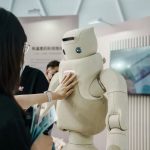 The shift reflects a broader change in China’s robotics industry: humanoids are moving from perform for audiences to doing real work.
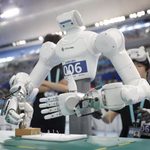 The designation puts Pudong in charge of exploring standards and practices that could eventually be adopted across the country.
 The city has built an “one core, two wings” industrial layout centered on Pudong, with Lingang and Jiading as the two supporting hubs.
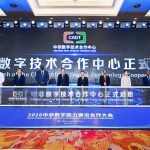 It will serve as a public-service platform and cooperation gateway for Zhejiang companies seeking to enter African markets.
 The city is now among the country’s first to combine dedicated legislation with an accompanying industry action plan.
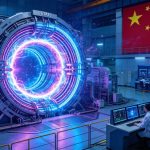 The “Solar Valley” will comprise three zones covering scientific research, industrial support and startup incubation.
 For international investors, the plan offers a relatively clear picture of where Shanghai expects its next wave of industrial growth to come from.
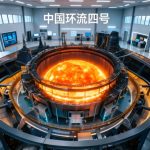 Once completed, China Fusion Engineering Test Reactor IV is expected to compete with projects such as the US-based SPARC and the UK’s STEP.
 The event will also bring together Hangzhou’s “Six Little Dragons” and the “New Eight Stallions” for the first time.
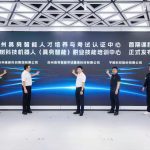 The move addresses a new question for embodied AI: who will train, operate and manage robots once they enter the workplace.
 The plan focuses on expanding investment opportunities, strengthening financial support and improving the policy environment.
 Jiangsu is positioning its manufacturing base to become a key part of China’s commercial space supply chain.
 By 2030, Zhejiang aims to establish a BCI technology and industrial innovation hub with strong international competitiveness.
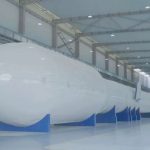 The facility is the first reusable launch vehicle assembly base and research center established by a commercial rocket company in Lingang.
 Suzhou Industrial Park’s milestone offers a glimpse into how AI is changing the geography of global manufacturing.
 The province will build a core industry worth 20 billion yuan ($3 billion), with related industries exceeding 50 billion yuan.
 The city has built 14 public drone takeoff and landing hubs, more than 600 terminal landing points and nearly 350 operational routes.
 The new framework aims to clarify which industries deserve priority attention and which require more cautious evaluation.
 The fund’s launch comes as Shanghai moves to implement its industrial strategy for the 15th Five-Year Plan period (2026-2030).
 High-tech industries accounted for a record 68.1% of the city’s newly utilized foreign investment, 25.7 percentage points above the national average.
 The surge reflects the rapid overseas expansion of Chinese EV manufacturers, as global demand for affordable electric vehicles continues to rise.
 Zhejiang’s new standard offers an early institutional framework for what many see as the emerging AI-powered “solo entrepreneur” economy.
 For international observers, the Changzhou project offers an early example of China’s emerging “power-compute integration” strategy.
 The initiative reflects a broader shift in seismology from human-supervised workflows to AI-driven real-time analysis.
 The announcements came as WAIC reached its largest scale to date, spanning more than 100,000 square meters across four exhibition venues in Shanghai.
 The rollout comes as China explores new ways to make access to large AI models as ubiquitous as utilities such as electricity and water.
 Among professionals aged 16 to 34, it has become one of the most attractive destinations outside China’s top-tier cities.
 The fund will primarily invest through specialist venture capital managers while reserving a limited allocation for direct investments.
 Traditional robot insurance policies that cover only hardware failures are falling short of the industry’s evolving needs.
 Investment activity recovered strongly in 2025, with both deal value and transaction volumes reaching record highs after a slump in 2024.
 The release came one day after Hangzhou unveiled a three-year action plan to become China’s leading hub for AI-powered one-person companies.
 The launch comes as Chinese developers accelerate work on drones, eVTOL aircraft and other next-generation aircraft.
 The initiative marks the first time Nanjing University has directly contributed capital to a market-oriented venture fund.
 Mirroring China’s vocational education system, the robot school has established a standardized training pathway.
 BCI is also seen as an area where Zhejiang is well positioned to establish a competitive advantage.
 Growth was increasingly driven by the city’s “three leading industries,” meaning integrated circuits, AI and biomedicine.
 Anhui has also become a national leader in automotive production, with both combustion and electric vehicle output now ranking first in China.
 Industrial output generated by firms with annual main-business revenue of 20 million yuan ($2.94 million) and more grew 5.0% year-on-year.
 The two-day event transformed the central plaza of Hangzhou Children’s Park into an immersive open-air technology showcase.
 Consumer spending showed signs of a shift toward higher-value technology products.
 Part of the momentum has been supported by changes to China’s tariff classification system.
 The rollout comes as authorities seek to curb unauthorized drone activity amid the rapid growth of the low-altitude economy.
 Provincial officials said insurance funds already deployed in the province had exceeded 500 billion yuan by 2025.
 The draft sets ambitious targets: by 2030, Anhui aims to rank among China’s top tier in humanoid robot output and place industrial robot production among the national leaders.
 Chinese productions accounted for more than 70% of total revenue, maintaining a dominant position in the global market.
 Electromechanical goods accounted for more than 70% of exports, while high-tech products recorded the fastest growth.
 Within the province, Suzhou continued to anchor external trade activity, recording 1.48 trillion yuan in imports and exports, up 37.5% year-on-year.
 In May alone, exports to ASEAN reached 68.49 billion yuan, surpassing the European Union to become the province’s largest overseas market.
 Officials described the initiative as a closed-loop model linking dormant assets, recovered funds and new productive investment.
 The move signals Ningbo’s ambition to transition from a manufacturing hub into a leader in high‑end marine industries, advanced maritime services, and ocean‑based innovation.
 The standard divides OPC capabilities into three broad categories — learners, builders and creators — and nine levels, from L1 to L9.
__1-150x150.jpg) The park said it hosts 74 listed companies, with several of them having crossed the 100-billion-yuan market-cap level.
The park said it hosts 74 listed companies, with several of them having crossed the 100-billion-yuan market-cap level. “Opportunities in this era are unprecedented, but those who fail to advance will fall behind,” Zhou, former provincial science and technology chief, said.
 The evaluation places Hangzhou ahead of Ningbo and Wuhan, which ranked second and third respectively across the first batch of 30 cities selected under the program launched in 2023.
 Zhejiang’s cross-border e-commerce exports reached 267.8 billion yuan ($39.58 billion) in 2025, up 24.9% from a year earlier and ranking second nationally behind Guangdong.
 The platform now allows merchants to apply for labels such as “delivery-only,” “dine-in available” and “open kitchen.”
 The initiative, launched in late 2025, forms the centerpiece of Hangzhou’s effort to build new industrial growth engines.
 Authorities described the facility as a “super AI laboratory” for the sector, intended to shift AI applications from academic research into real-world use cases across tourism, museums and cultural production.
 The facility fills a regional gap in testing capabilities for full robot systems and key components, authorities said.
 The 13-point agreement covers pricing, merchant treatment, rider protections and platform governance.
 Through its “Qinghe Cloud Recruitment” initiative, the city organizes more than 800 global recruitment events online each year and offers around 1 million job opportunities.
 Selected companies span sectors including general AI, brain-inspired computing, synthetic biology, low-altitude aviation and frontier chip technologies.
 The platform has begun pilot operations in Nanxing subdistrict, one of Shangcheng’s grayest communities, where residents aged over 60 account for 44.4% of the population.
 The platform also automatically matches companies with eligible policy support programs, reducing paperwork and repeated applications.
 Since 2018, the city has released annual reform packages to improve its business environment, rolling out a cumulative 955 measures over eight years.
 Teaching will combine in-house interdisciplinary faculty with external mentors from Zhejiang University, Shanghai Jiao Tong University and major technology companies.
 The broader ecosystem around the China (Wenzhou) Data Security Harbor has already attracted 1,215 data-related companies, according to the conference.
 Private-sector industrial firms remained the main engine of growth in the January-April period, with output rising 7.9% and contributing nearly 80% of total industrial expansion.
 The moves come as Hangzhou intensifies efforts at the start of its “15th Five-Year Plan” period (2026-2030) to position itself as what officials call China’s “top city for AI innovation and development.”
 Liu said the platform “cannot become a showcase that is built but unused,” calling for bolder experimentation and business models capable of generating sustainable revenue.
 The plan lays out “1 overall goal, 8 key areas and 17 priority tasks,” targeting design, construction, management and service operations across the city’s built environment.
 The city identified three priorities for the coming five years: open-source AI, embodied intelligence and institutional reform.
 The rollout of the four new funds came on the heels of two smaller vehicles unveiled on May 15, sized at 1 billion yuan and 500 million yuan, respectively.
 On the financial side, many Zhejiang exporters are primarily settling cross-border trade directly in yuan, circumventing dollar-denominated wire transfers.
 Under the system, carbon accounts function like digital ledgers for emissions generated by companies and individuals.
 By the end of 2025, the three funds had approved investments into 392 sub-funds and 4,614 projects, with total committed capital reaching 143.3 billion yuan.
 They include a 1 billion yuan low-carbon development fund and a 500 million yuan secondary, or S, fund focused on private equity share transfers.
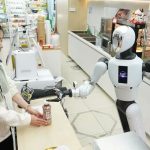 The center combines commercial demonstrations with data collection, skill training and R&D collaboration functions.
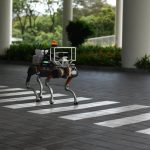 Local officials are also leveraging the competition as a platform to court broader industry participation.
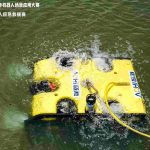 Teams were required to guide self-developed underwater robots through a full sequence of search, positioning, retrieval and return tasks across the lake’s thousand-acre natural water area.
在杭揭牌-1-150x150.jpg) The launch comes as embodied AI startups face mounting bottlenecks around fragmented computing resources, limited access to training data and a lack of standardized testing environments.
The launch comes as embodied AI startups face mounting bottlenecks around fragmented computing resources, limited access to training data and a lack of standardized testing environments. This year’s competition focuses on industrial, service and special-use applications, with all tasks derived from practical pain points identified by leading companies rather than abstract benchmarks.
 The sector aims to reach an annual output of 8 billion yuan by 2027, with 30 takeoff and landing sites, 40 drone routes, and low-altitude flight hours climbing from 5,000 to 75,000 annually.
 The latest policy expands the number of sectors open to private capital from seven to nine by adding offshore wind and urban infrastructure projects.
 This event comes as local governments and companies increasingly shift attention from flashy demonstrations toward practical industrial deployment.
 The policy calls for public-sector buyers to prioritize new-energy and methanol-powered vehicles across public transit, sanitation, driving schools and postal delivery fleets.
 Exports of mechanical and electrical products — Zhejiang’s largest export category — rose 5.9% to 661.8 billion yuan, accounting for 47.4% of total outbound shipments.


__1-150x150.jpg.webp)


在杭揭牌-1-150x150.jpg.webp)


