- The Ant Group-backed robotics startup has deployed its humanoid robot in a Shanghai pharmacy without modifying the store
- The robot can navigate aisles as narrow as 80 centimeters to pick and sort medicines
Robbyant (蚂蚁灵波), the embodied-intelligence unit backed by Ant Group, is putting a humanoid robot to work in a Shanghai pharmacy, testing whether embodied AI can handle the messy conditions of a real retail environment.
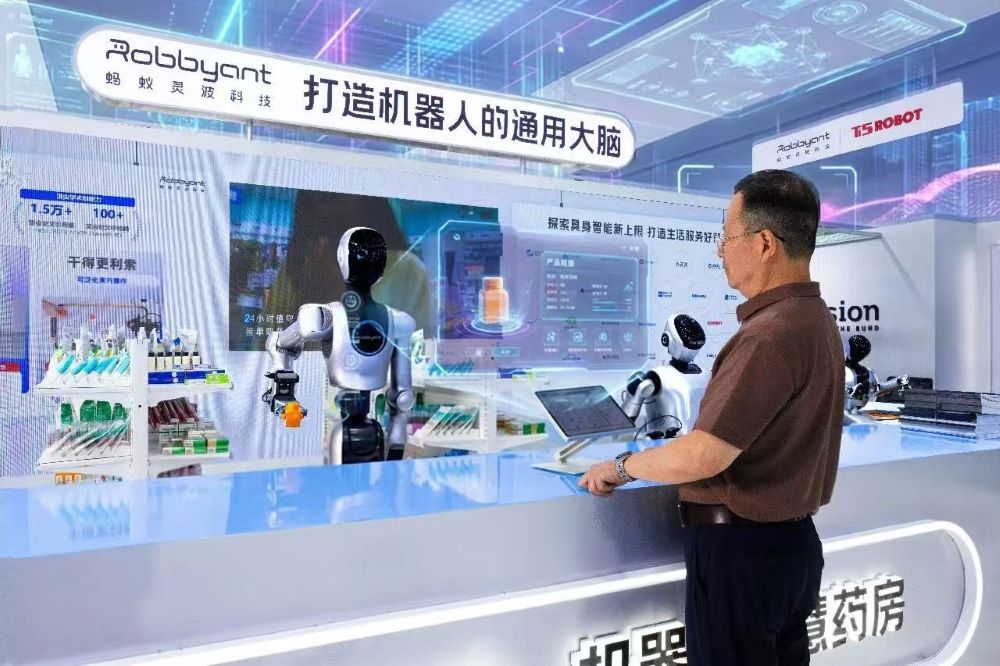
At the 2026 Inclusion Conference on the Bund in Shanghai that began on September 9, Robbyant demonstrated a “smart pharmacy” scenario developed with Shanghai Guoda Drugstore, a pharmacy chain.
Minimal modification
During the showcase, the robot receives an order, navigates to a shelf, picks out the requested medicine and delivers it to a collection window.
The system has already been deployed at Guoda’s stores in Shanghai without requiring any modifications to the premises, according to Robbyant.
.jpg)
Unlike a controlled exhibition booth, a working pharmacy presents a tougher challenge. Medicine boxes are similar in size and densely packed, while the narrowest aisles are only about 80 centimeters wide.
Transparent packaging, reflections and randomly placed products add further visual complications, the firm added.
The robot can autonomously receive orders, identify medicines and pick them from shelves.
During night shifts, it can also assist pharmacists with sorting, taking over repetitive tasks, a Robbyant spokesperson was quoted as saying in Chinese media reports.
One brain, many robots
The system is powered by Robbyant’s LingBot-VLA 2.0 embodied-AI foundation model, which is designed to work across different robot bodies.
During pretraining, the model has been adapted to 17 major robot brands and 20 robot configurations, including single-arm, dual-arm, bipedal and wheeled robots, the company said.
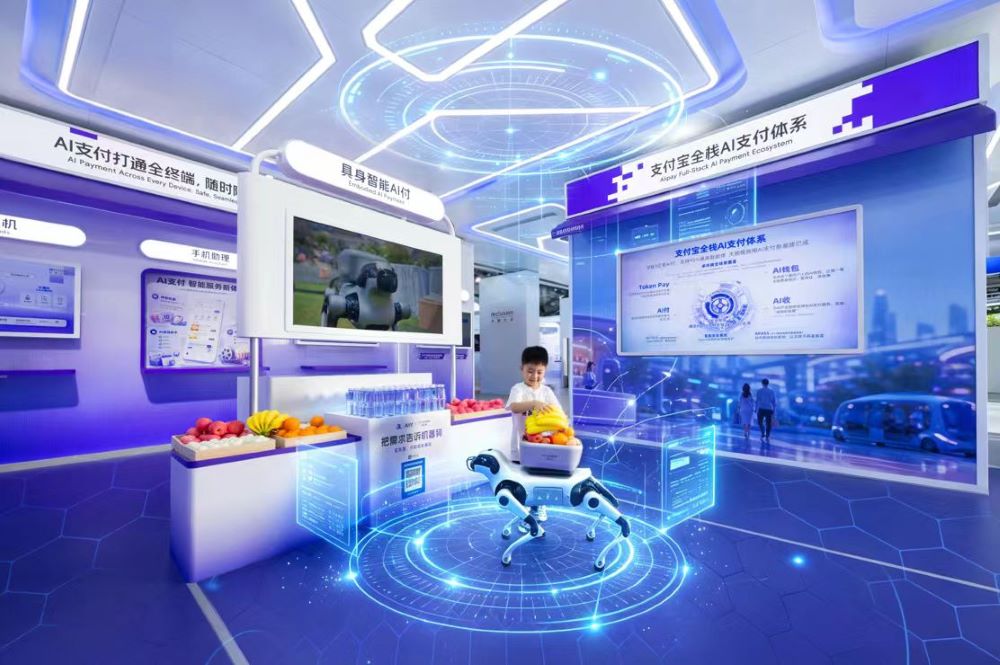
At the conference, robots from manufacturers including Leju Robot (乐聚) and Ti5Robot (钛虎) were also running on the same underlying model, demonstrating Robbyant’s push toward a “one brain, many robots” approach.
The strategy reflects a broader shift in embodied AI. As robots move from demonstrations into pharmacies, warehouses and factories, the challenge is no longer simply making them walk, run or manipulate objects.
They need to understand changing environments and complete tasks reliably without every step being pre-programmed.
Toward general-purpose systems
That could make cross-platform AI models increasingly important as the industry moves from customized “one robot, one task” systems toward more general-purpose robots that can be deployed across different settings.
According to a 2026 report on embodied robotics from Askci, a market researcher, the sector is entering an initial phase of small-scale commercialization, with competition shifting from whether robots can move to whether they can complete tasks reliably and be deployed at scale.
Header image credit: Robbyant’s official WeChat