
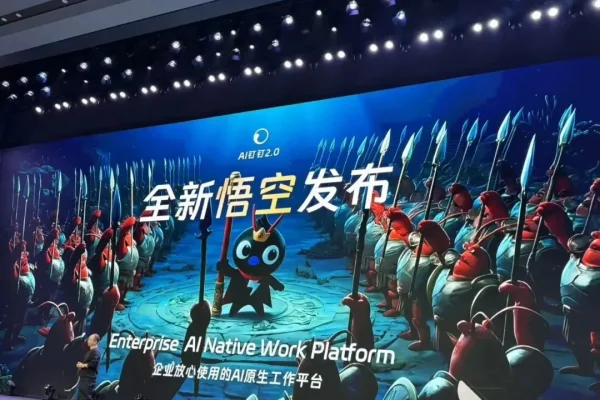
Alibaba embeds Qwen 3.6-Plus across Wukong AI app after model debut
The rapid integration reflects Alibaba’s strategy of pairing foundation models with deeply embedded enterprise scenarios, Wukong’s spokesperson said.
The rapid integration reflects Alibaba’s strategy of pairing foundation models with deeply embedded enterprise scenarios, Wukong’s spokesperson said.

Since the launch of its AI experience initiative on March 30, Qwen has collected more than 100,000 user evaluations.

The Yangtzeer’s reporter tested the service, successfully topping up 50 yuan via voice command and receiving 12 yuan in ride-hailing credit.

Automakers increasingly view vehicles as a natural platform for AI assistants because drivers rely heavily on voice interaction while managing complex, decision-heavy travel scenarios.

The ability to recognize and process such cultural references represents a major leap forward in natural language understanding for AI assistants.

Alibaba’s AI division made notable strides, with its consumer-facing product, Qwen, surpassing 300 million monthly active users.

The recruitment push comes as Alibaba accelerates development of AI agents — software systems designed to execute tasks autonomously on behalf of users — a strategy the company sees as the next evolution of digital services.

The new unit signals a strategic shift for Alibaba away from competing primarily on standalone large language models toward building a broader AI operating framework.

A key differentiator of the Qwen eyewear is the product’s deep integration with the broader Alibaba ecosystem.