.jpg)
- Geely EX5 EM-i marks first production milestone for their Brazilian joint venture
- The partnership lets Geely tap Renault’s existing factory and local network to get around Brazil’s steep import tariffs
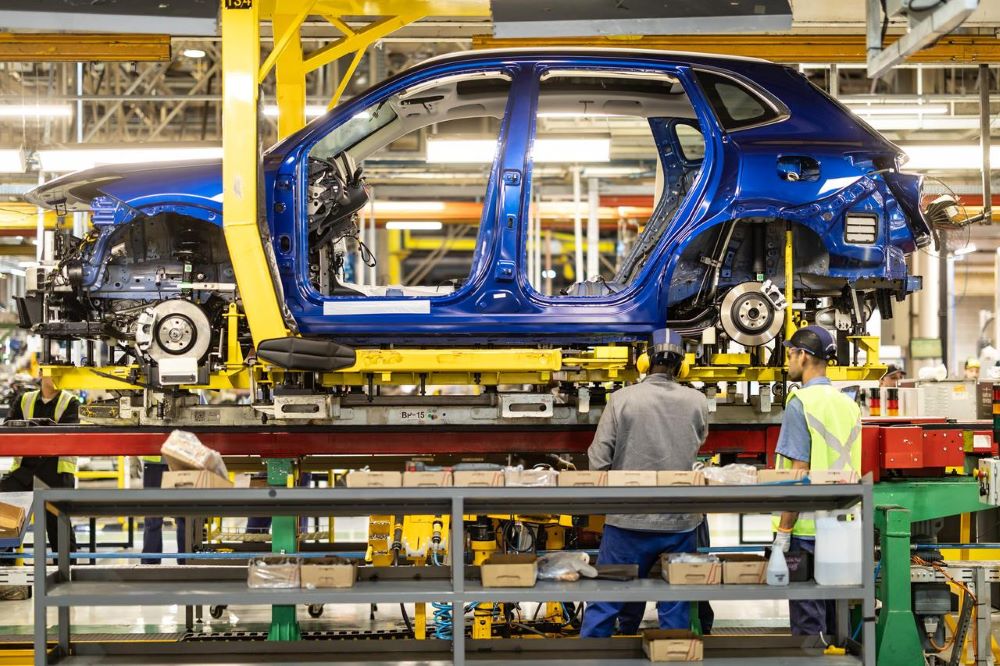
Geely and Renault have rolled out the first locally made Geely EX5 EM-i, known in China as the Geely Galaxy Starship 7, at Renault’s Ayrton Senna Industrial Complex in Brazil.
The September 15 milestone marks the first local production result of Renault Geely do Brasil, the joint venture established by the two automakers.
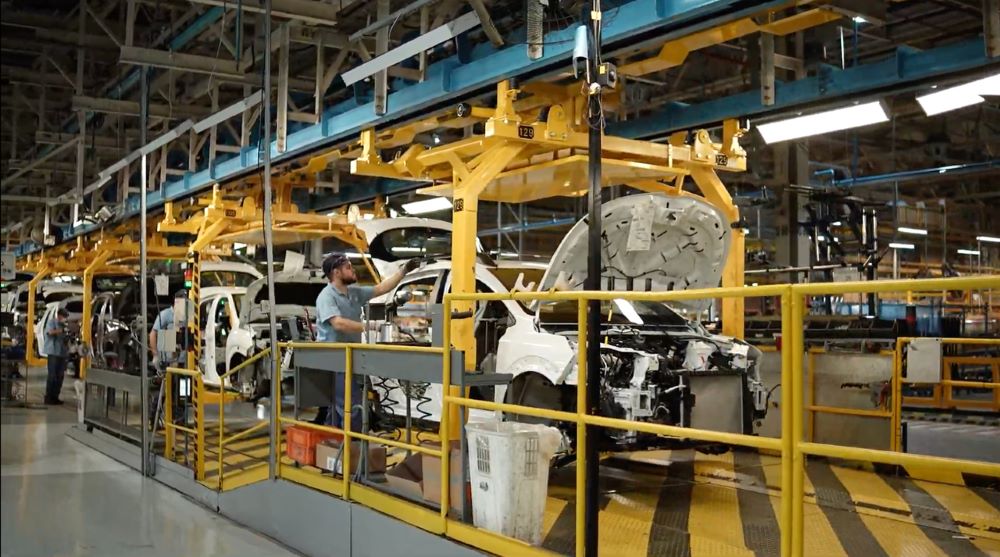
The plant underwent technical upgrades and production-line modernization earlier this year and can now build battery-electric, plug-in hybrid and flex-fuel vehicles.
Making use of Renault’s capacity
Deliveries of locally produced units of EX5 EM-i, a plug-in hybrid electric vehicle, are expected to begin in the fourth quarter.
The all-electric Geely EX2, sold as the Geely Xingyuan in China, is scheduled to enter production at the plant in December.
“Bringing the first EX5 EM-i off the line is another important milestone in our strategic partnership with Renault,” said Yang Xueliang (杨学良), senior vice president of Geely Holding Group. “Brazil is a strategically important market for Geely’s global expansion.”
Ariel Montenegro, president and CEO of Renault Geely do Brasil, said the upgraded plant had become an advanced new-energy vehicle manufacturing base.
“We will continue to introduce new products and strengthen manufacturing, supply chain, sales and service capabilities,” he said.
The Renault-Geely partnership was launched in November 2025 to bring Geely’s new-energy vehicle technology and models to Brazil while making greater use of Renault’s existing industrial capacity.
Making headway
For Geely, the arrangement offers a faster way into Brazil’s protected auto market. With import tariffs on fully built vehicles reaching 35%, building a new factory can take years, while exporting vehicles from China can erode their price advantage.
Instead, Geely is bringing its technology platforms and components — including its GEA new-energy architecture, Thor hybrid technology and Shendun battery technology — while leveraging Renault’s existing plant, dealer network and local regulatory experience.
The first vehicle rolling off the line less than a year after the partnership was signed highlights the speed of the approach.
Replicating a winning formula
It also extends a model Geely has used elsewhere. In South Korea, Geely took a minority stake in Renault Korea and has used its Busan plant to produce vehicles based on Geely’s CMA architecture.
In Europe, it has also gained access to production capacity at Ford’s Valencia plant through a minority investment.
Brazil is now the latest test of Geely’s strategy of using partnerships to plug into existing overseas manufacturing capacity rather than building every facility from scratch.
Chinese automakers now account for 18.3% of Brazil’s auto market, making South America an increasingly important overseas market for Chinese carmakers after Southeast Asia and Europe.