- City aims to keep global edge in open-source AI and embodied intelligence
- Officials pledge deeper policy support, talent incentives and long-term capital
Hangzhou has set a target of growing its economy to 3 trillion yuan ($440 billion) by 2030 and lifting per-capita GDP above $30,000, placing AI at the center of its next five-year development strategy.
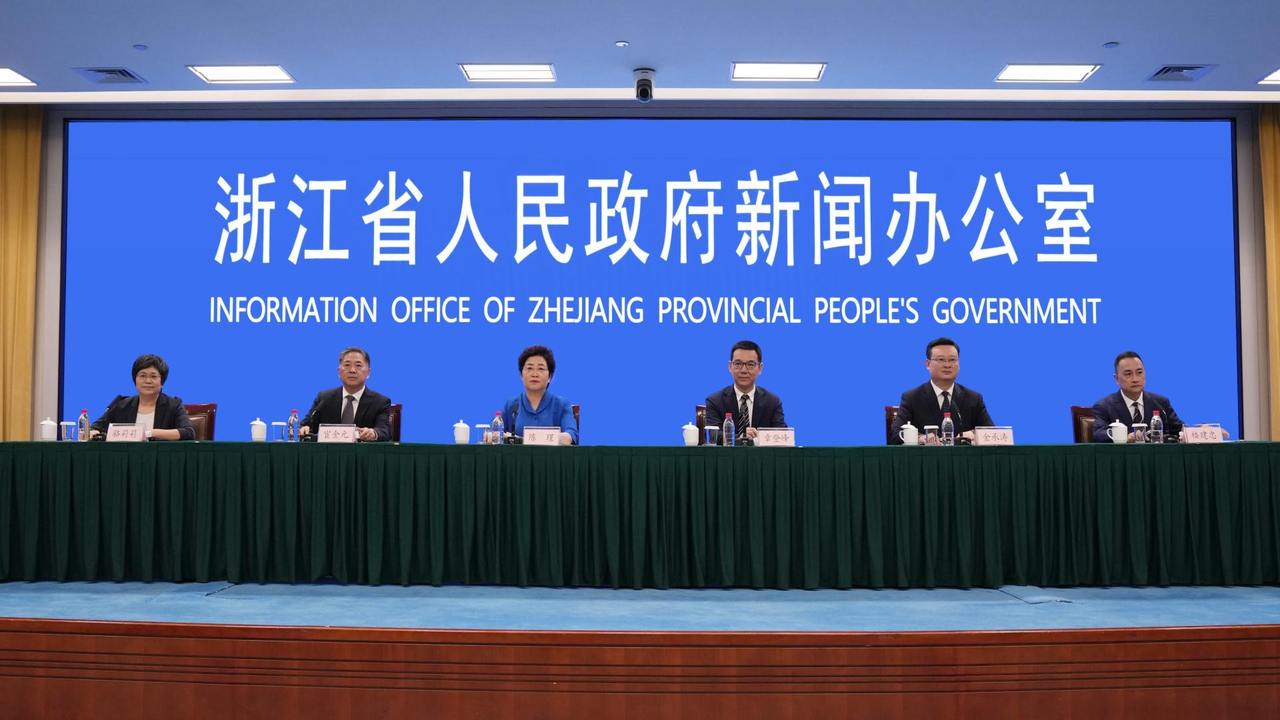
The goals were unveiled May 19 during a provincial government press briefing outlining the city’s priorities for China’s 15th Five-Year Plan period (2026-2030).
Officials said Hangzhou plans to accelerate its bid to become China’s leading AI innovation hub, building on a sector that already generates about 460 billion yuan in annual core industry revenue.
The city identified three priorities for the coming five years: open-source AI, embodied intelligence and institutional reform.
On open-source AI, Hangzhou said it will continue supporting upgrades to models such as Alibaba’s Qwen and DeepSeek, while cultivating what it described as a “third globally leading open-source foundation model.”
Officials also pledged support for AI-enabled one-person companies and elite developer teams, aiming to build what they called the country’s strongest open-source ecosystem.
Embodied intelligence — AI systems integrated with physical robots — was highlighted as another strategic priority.
The city plans to build a full industrial chain spanning research, manufacturing and commercial deployment, with the goal of turning embodied AI into a world-class advanced manufacturing cluster.
On the regulatory side, Hangzhou said it has already introduced China’s first local regulation dedicated to embodied intelligence robotics and is now drafting broader legislation to support AI industry development.
Officials also said the city will accelerate experiments tied to national data infrastructure programs and explore opportunities linked to the emerging “token economy.”
Narrowing the urban-rural income gap
Beyond AI, Hangzhou outlined broader goals tied to common prosperity and regional development. The city aims to narrow the urban-rural income gap ratio to 1.58 by 2030, expand industrial development across western counties and build more than 30 rural industrial chains worth over 1 billion yuan each.
Officials also pledged to further improve the business environment through talent incentives and long-term investment capital.
The city has earned a reputation for its business-friendly policy climate and can-do spirit over the past few years, providing fertile ground for startups to grow and succeed.
Hangzhou currently hosts more than 2 million registered business entities and has ranked first nationally for the number of companies on China’s Top 500 private enterprise list for 23 consecutive years.
Officials also pledged to foster a more tolerant innovation environment by expanding talent programs such as the “Chunyu” (spring rain) and “Qinghe” (young lotus) initiatives and deepening a policy framework under which “enterprises identify talent and the government recognizes it.”
Courting young talent
Notably, Hangzhou has attracted more than 350,000 new university graduates under the age of 35 each year for six consecutive years. Leveraging continued inflows of young professionals, the city said it wants to cultivate a culture that encourages innovation while showing greater tolerance for failure.
Late last week, Hangzhou had already outlined plans to expand its “3 plus N” industrial fund cluster to 311 billion yuan, though the target was revised higher again at the May 19 policy briefing.
Authorities said the fund pool would eventually be increased to 500 billion yuan, with capital directed toward early-stage startups, long-term projects and hard-technology investments.
The city also pledged to step up delivery of business-support policies through its online government services platform.