- Alibaba’s AI assistant limits features and adds safeguards for younger users
- The move comes as China tightens rules on AI companionship and emotional interaction
Alibaba’s AI assistant Qwen has upgraded its minors protection mode, restricting features and adding safeguards around inappropriate content, emotional dependence and excessive use.
Parents can activate the mode with a separate password. The app then limits access to four learning functions: photo-based Q&A, AI writing, translation and deep research.
Chat records are kept separate from those in normal mode, and access to third-party links is restricted.
Qwen will also strengthen controls on vulgar and violent content and tailor responses to minors.

Requests for virtual partners or family members will be softly rejected with positive guidance, while users showing signs of extreme emotional distress will be directed toward professional psychological support.
Continuous use beyond 30 minutes will trigger a break reminder.
China tightens the rules
The upgrade follows China’s interim AI anthropomorphic interaction rules, which took effect July 15 and prohibit providers from offering virtual relatives or virtual partners to minors.
Qwen had already taken down related functions before the rules came into force and has said it will continue refining its protection and risk-control measures.
Qwen vs. ChatGPT for teens
The move comes shortly after OpenAI launched ChatGPT for Teens, which also adds stronger safeguards, parental controls and usage reminders for users aged 13 to 17.
The two approaches reflect similar concerns but different regulatory settings: Qwen’s changes are being implemented within China’s new AI-companion rules, while OpenAI’s teen product came amid growing legal and public scrutiny over chatbot safety.
For overseas observers, the comparison shows how AI companies are drawing new boundaries between AI as a learning tool and AI as a social or emotional companion.
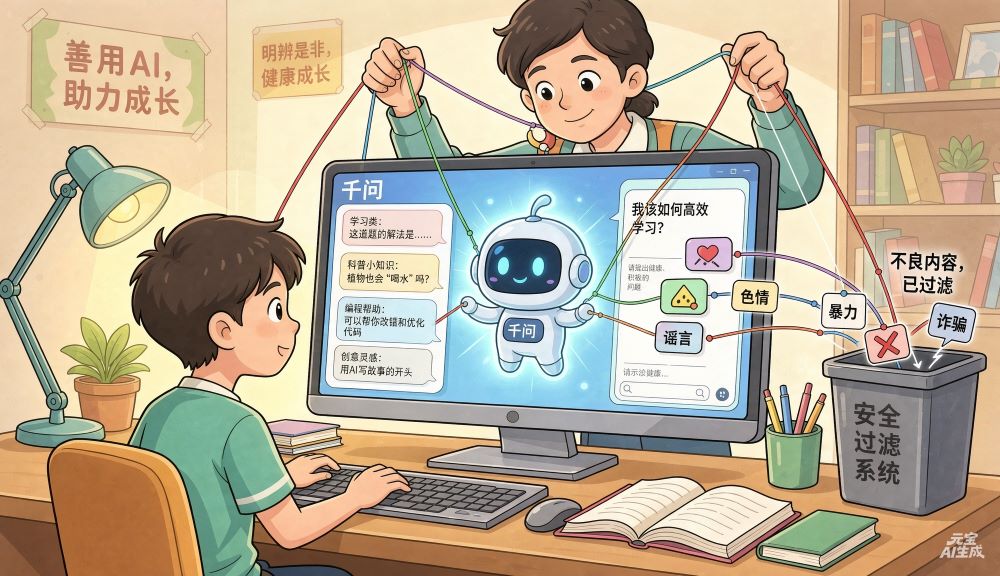
Header image generated by Yuanbao AI